
The Best Bonsai Trees for Beginners: Where Should You Start?
Posted by Melissa Brown on Oct 7th 2026
Last week we had someone reach out to our Instagram account and ask:
“What’s the best bonsai tree for a beginner?”
It’s a great question - one we get a lot, and one we’re always happy to answer.
Bonsai can seem intimidating when you’re first getting started. There are different species, different styles, pruning techniques, watering routines, soils, pots, and plenty of new terminology to learn.
But here’s the good news:
You don’t have to be a bonsai expert to start growing bonsai.
Choosing a tree that fits your environment, experience level, and lifestyle can make your first bonsai experience much more enjoyable.
What Makes a Bonsai Good for Beginners?
When we talk about a “beginner-friendly” bonsai, we don’t mean a tree that requires no care. Every bonsai needs attention.
Instead, a good beginner bonsai is one that is relatively forgiving, responds well to care and pruning, and fits the environment you can provide (including your geographical location).
The best bonsai for you isn't necessarily the tree that requires the least work.
It’s the tree that fits your environment and your ability to care for it.
Here are a few species that can make great choices for someone starting their bonsai journey:
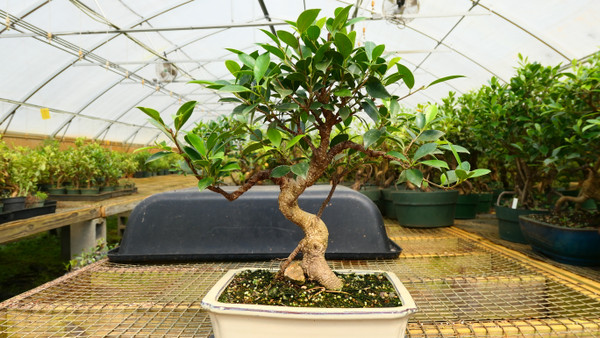
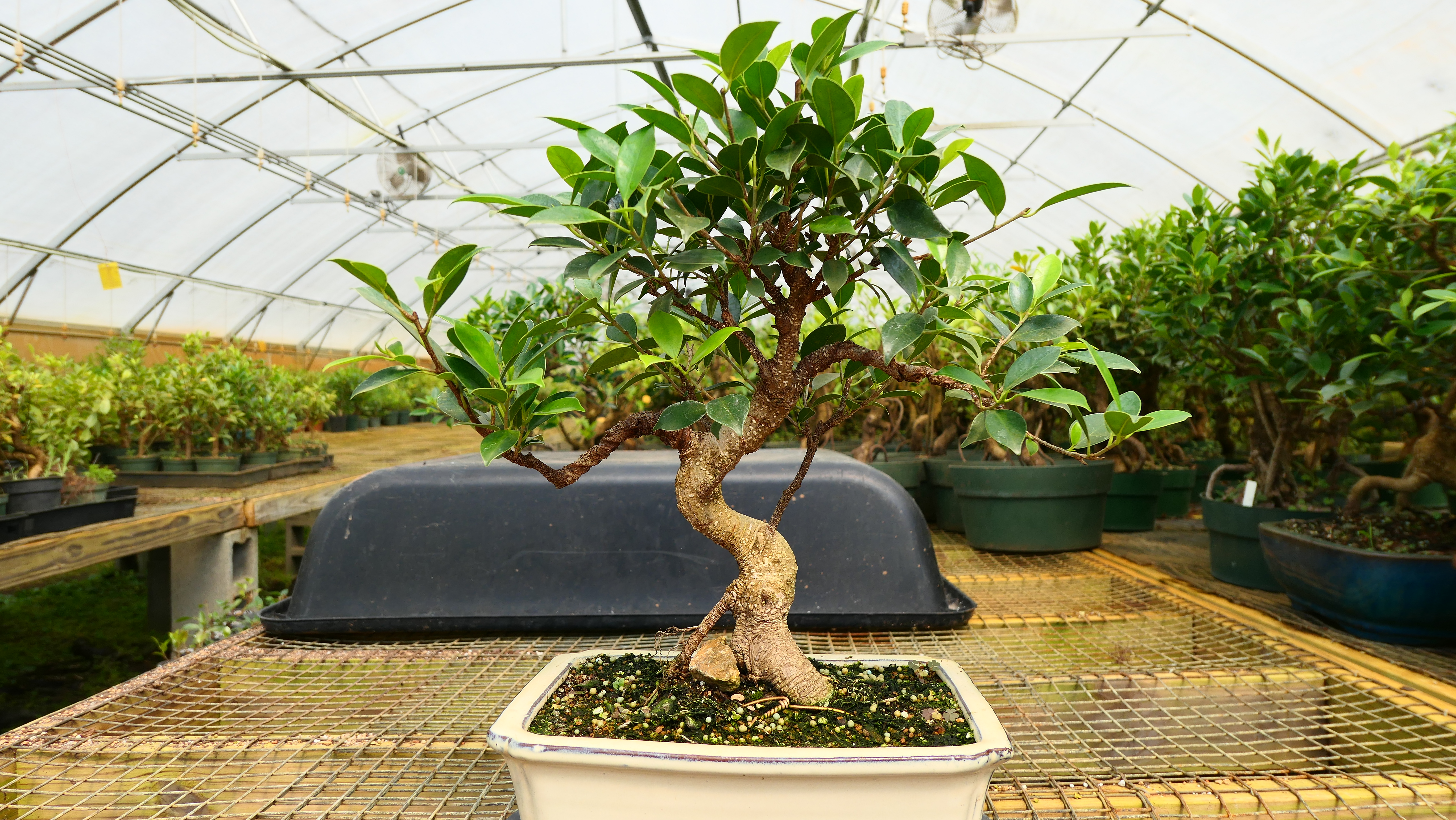
- Ficus Bonsai
If you're looking for a forgiving first bonsai, Ficus is a great place to start.
Ficus are resilient, adaptable trees that respond well to pruning and training. They also have attractive foliage and interesting trunks that make them rewarding to work with as you learn.
Ficus are tropical trees, which means they enjoy warm temperatures and need protection from cold weather. During the warmer months, they can enjoy life outdoors. When temperatures begin to drop, they can be brought indoors.
Best for: Beginners looking for a relatively forgiving tree that can adapt well to bonsai training.
Ficus Bonsai
- Dwarf Schefflera Bonsai
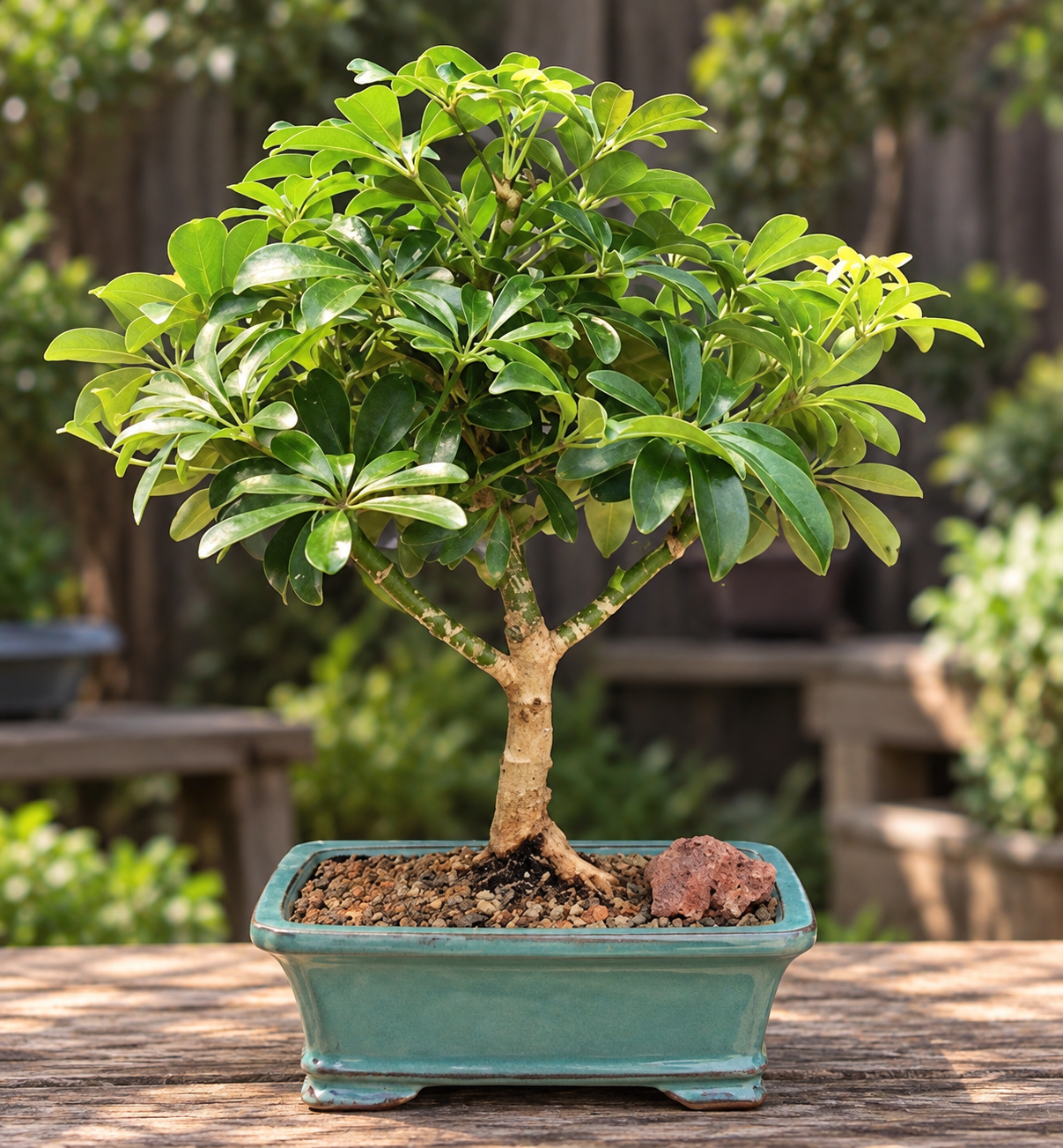
Dwarf Schefflera, sometimes called the umbrella tree, is another popular choice for beginners.
They're adaptable and can tolerate some of the mistakes that are common when you're learning how to care for bonsai. Their foliage also gives them a unique appearance compared with many traditional bonsai species.
Like Ficus, Dwarf Schefflera are tropical and can be brought indoors when temperatures become too cold.
Best for: Beginners looking for an adaptable tree with distinctive foliage.
Dwarf Schefflera Bonsai
- Fukien Tea Bonsai (Also known as Fujian Tea)
Want a bonsai that can give you a little something extra?
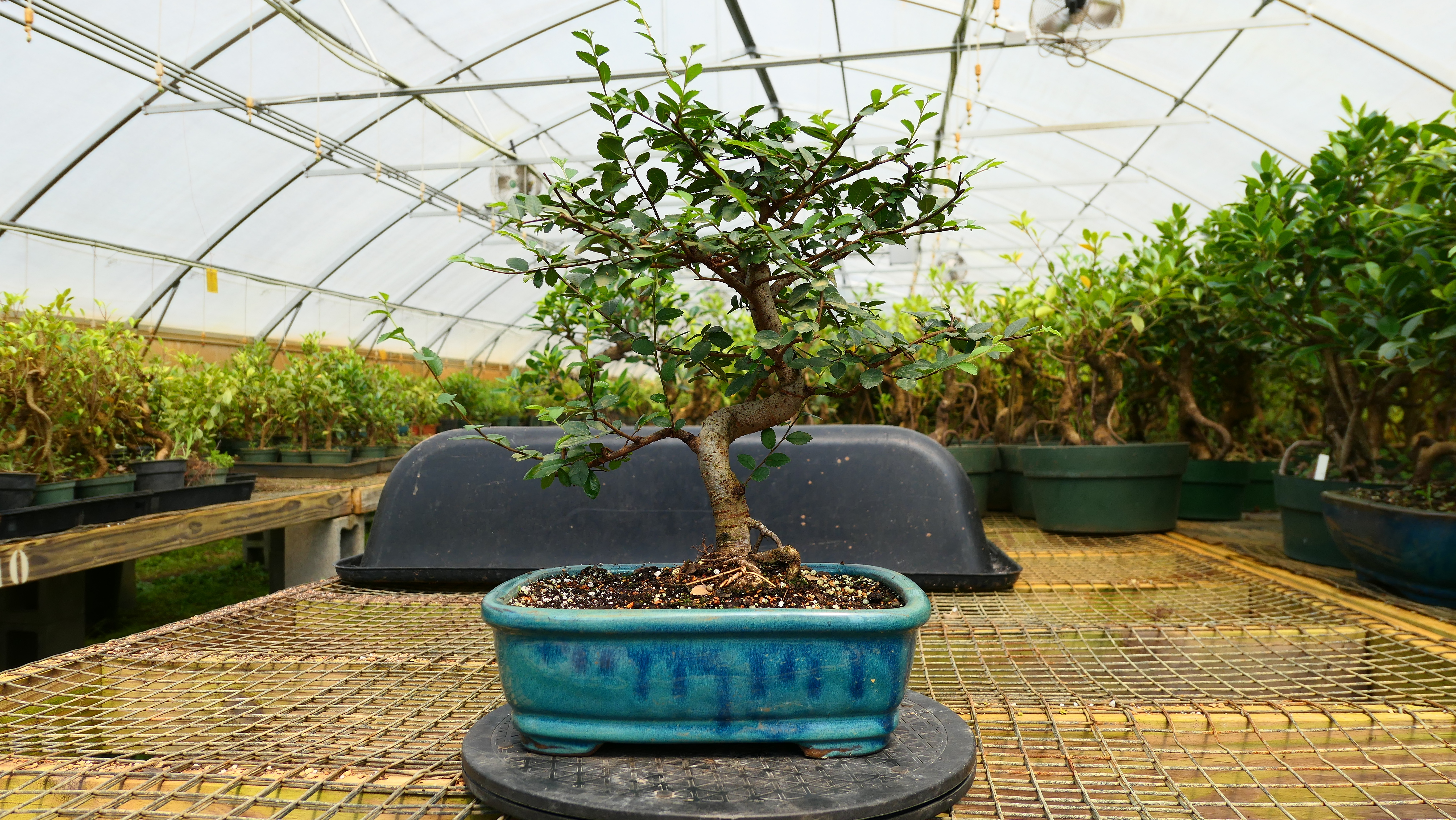
Fukien Tea is known for its small leaves, textured bark, tiny white flowers, and occasional berries. It has many of the characteristics people picture when they imagine a classic bonsai.
It can be a wonderful beginner tree, although it appreciates a little more consistency with watering, light, and humidity. So, while it might be a little extra work, it is worth the reward.
Best for: Beginners who want a beautiful, traditional-looking bonsai and are ready to give it a little extra attention.
Fukien Tea Bonsai
- Jade Bonsai
If you're the person who occasionally forgets to water your plants, a Jade bonsai may be worth considering.
Jade has succulent characteristics, meaning it stores water in its leaves and stems. That makes it more tolerant of occasional missed watering than many other bonsai species.
Jade still needs plenty of light and proper care—but it can be a forgiving introduction to bonsai.
Best for: Beginners who want something a little more tolerant of occasional missed watering.
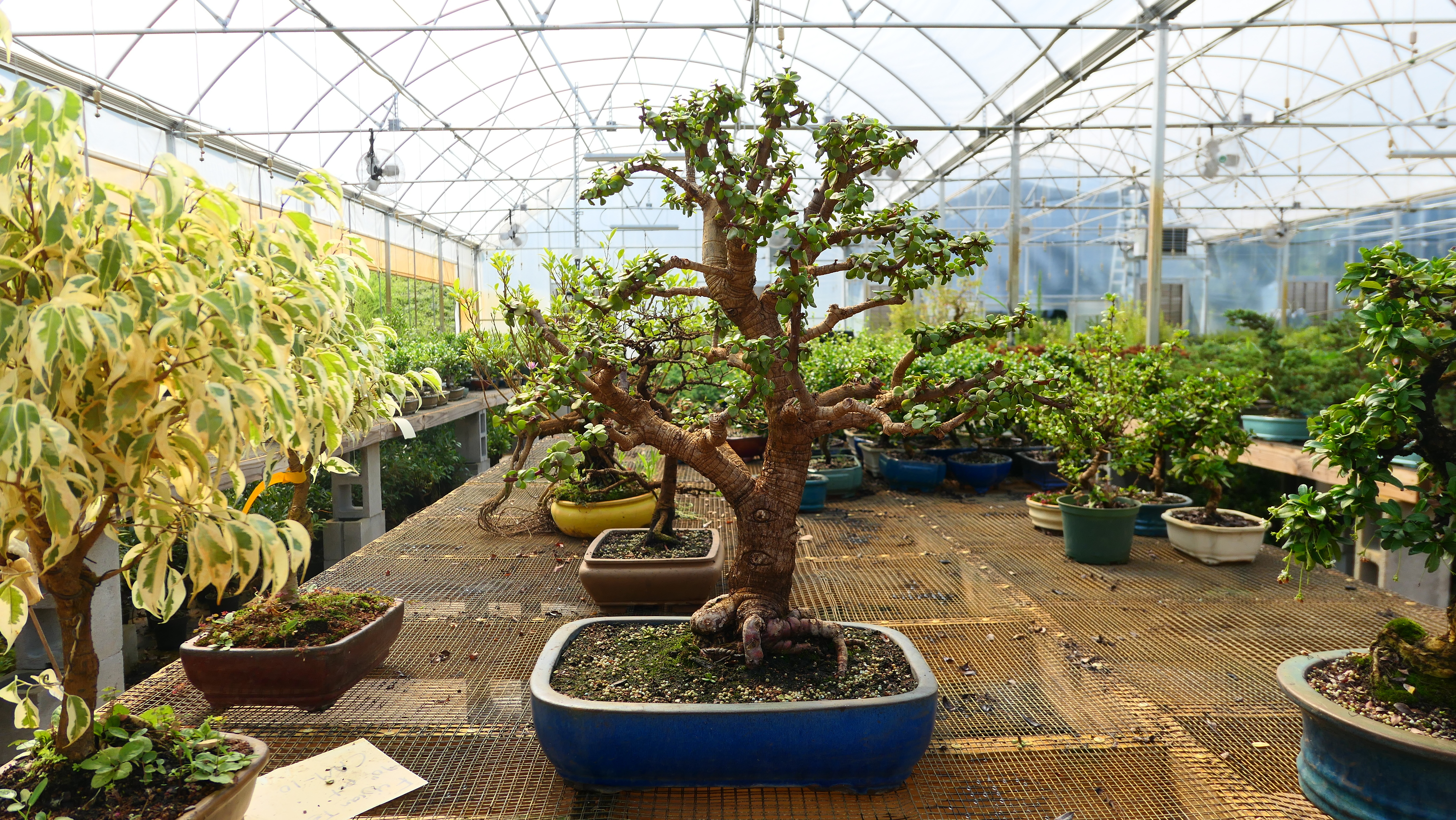
Jade Bonsai Tree
Here's the Important Part: Bonsai Aren't Houseplants
Now for one of the biggest misconceptions we see with new bonsai owners.
Most bonsai trees are not meant to live inside your house year-round.
During the warmer months, bonsai generally do best outdoors where they can receive natural light, fresh air, and good airflow.
For many bonsai, a location with morning sunlight is ideal. During the growing season, you'll also need to keep a close eye on watering.
Summer Bonsai Care
When your bonsai is actively growing outdoors:
Give it plenty of appropriate sunlight.
Morning light is generally a great choice, while protection from intense afternoon heat may be needed depending on the species and your climate.
Check your bonsai every day.
During warm weather, many bonsai need to be watered daily. Always check the soil rather than watering simply because it's a certain time of day.
Fertilize during active growth.
Your bonsai needs nutrients while it is actively growing. Follow the fertilizer recommendations for your particular species and the fertilizer you're using.
And remember: a bonsai in a small pot can dry out much faster than a plant growing in the ground.
Now for the fun part - because a customer who lives in Georgia was interested in starting to learn bonsai NOW, I had to take into consideration what I would recommend because the temps are getting cooler.
What Happens When the Weather Gets Cold?
As temperatures begin to fall, your bonsai's needs change.
Some outdoor bonsai species need to remain outdoors and experience their natural seasonal dormancy. Tropical bonsai are different: they need to be protected from cold temperatures and brought indoors when necessary.
This is where the term “indoor bonsai” can be a little misleading.
Tropical bonsai aren't necessarily houseplants. They're tropical trees that can live indoors temporarily when outdoor temperatures become too cold.
And once they're inside, their care changes.
Caring for Tropical Bonsai Indoors
Tropical bonsai such as Ficus, Schefflera, and Fukien Tea can be brought indoors when temperatures drop.
But bringing your bonsai inside doesn't mean putting it on a shelf and forgetting about it.
It still needs the right environment.
Light
Your bonsai needs adequate light indoors.
A bright window can be a great location, but if your home doesn't provide enough natural light, a grow light may be necessary. If you have a Fukien Tea Bonsai it will still need a grow light in the winter regardless of how good your natural light is in your home.
Humidity
Indoor heating can make the air considerably drier than your bonsai would experience outdoors.
A humidity tray can help.
Place your bonsai pot on a tray filled with pebbles and water, keeping the water level below the top of the pebbles. The bonsai pot should sit on the pebbles—not directly in the water.
As the water evaporates, it increases the humidity immediately around the tree.
Temperature
Keep your bonsai away from heating vents, fireplaces, and cold drafts.
A stable indoor environment is much better than repeatedly moving your tree between dramatically different temperatures.
Watering
This is one of the biggest changes you'll notice when you bring a tropical bonsai indoors.
Your bonsai will use less water during the winter.
Tropical bonsai trees generally slow down and experience reduced growth indoors during winter rather than continuing to grow actively. Because they're using less water, they need to dry out a little more between waterings.
Don't continue watering every day simply because you did during the summer.
Check the soil first.
When the tree needs water, water thoroughly. Then allow the soil to dry somewhat before watering again.
Don't Panic When Growth Slows Down
If your tropical bonsai was producing new leaves and shoots all summer and suddenly seems much quieter indoors, don't panic.
Reduced growth during the winter months is normal.
Shorter days, lower light levels, and the change from an outdoor to an indoor environment all affect the tree.
And if you end up with a non-tropical bonsai that lives outdoors year-round – don’t be shocked when they go dormant or drop their leaves. That’s what most of your regular outdoor trees do, and let’s be fair, bonsai are trees too!
Winter is a slower season for your bonsai.
The goal isn't to force it to keep growing at its summer pace. The goal is to provide the light, water, humidity, and temperature it needs until the growing season returns.
So, What's the Best Bonsai for a Beginner?
The answer depends on you.
Do you have a bright window?
Can your bonsai spend the warmer months outside?
Are you comfortable checking the soil regularly?
Do you have enough light indoors for winter?
Are you willing to learn as your tree grows?
If the answer is yes, you're ready to start.
Ficus, Schefflera, Fukien Tea, and Jade can all be wonderful introductions to bonsai, but there's no single “perfect” beginner tree.
The best bonsai for a beginner is the one that fits your environment, your lifestyle, and your willingness to learn.
And that's one of the best things about bonsai.
You don't have to know everything when you start.
You just have to start.
Ready to Find Your First Bonsai?
Explore Hagabon's collection of bonsai trees and find a tree that's right for your space, experience level, and growing environment.
Your bonsai journey starts with one tree. And if you have any questions, please don’t hesitate to reach out.